With air pollution levels climbing in many cities concerns about heart health are growing faster than ever. Poor air quality doesn’t just affect your lungs it directly impacts your heart, blood circulation and overall stamina. The good news is that the right kind of exercise can help protect your heart even when pollution levels are high.
How Air Pollution Impacts the Heart
Polluted air contains fine particles that enter the blood stream through the lungs. Over time this can increase blood pressure, inflammation and stress on the heart. Long term exposure raises the risk of heart disease, fatigue and reduced oxygen supply. That’s why staying active smartly is essential especially in urban environments.
Can Exercise Still Help During High Pollution?
Yes absolutely when done correctly. Regular exercise improves heart efficiency, blood flow and oxygen utilization making your cardiovascular system more resilient. However choosing the right exercises, location and timing is key to avoiding further strain on your lungs.
Best Heart Friendly Exercises in Polluted Conditions
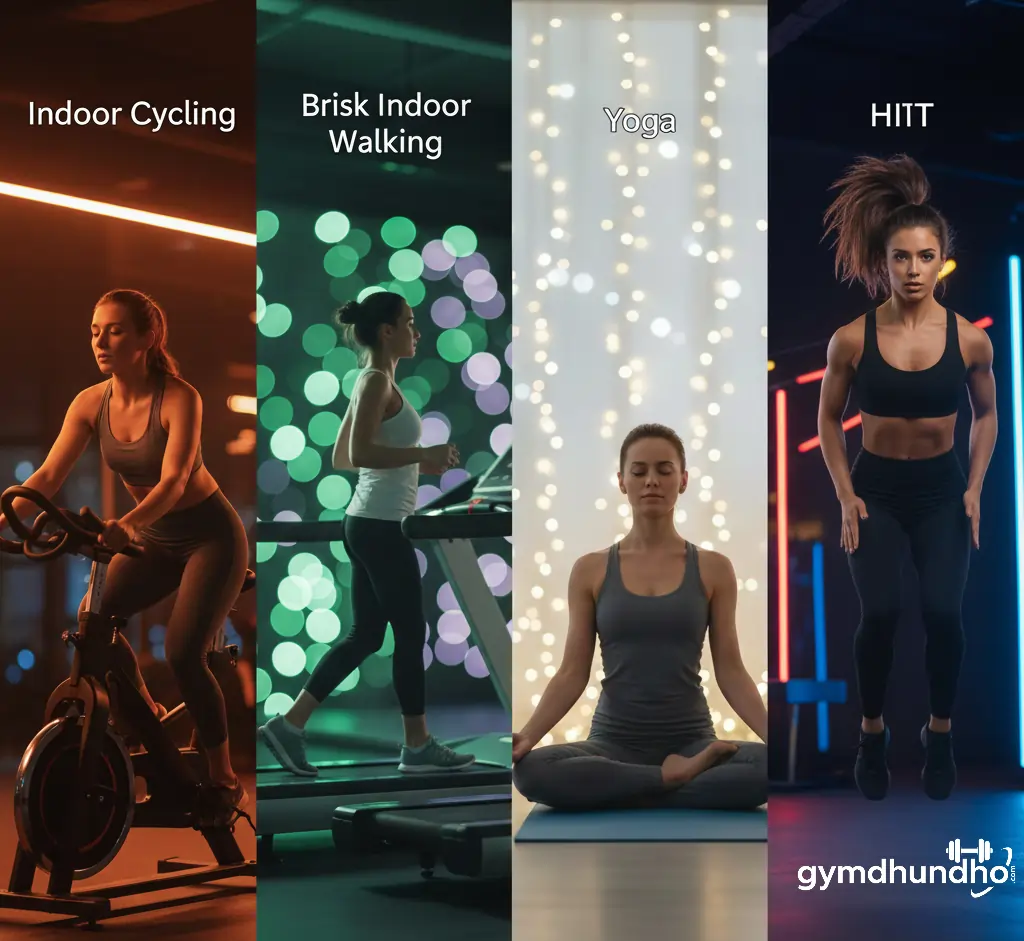
Brisk Indoor Walking
Walking at a steady pace indoors boosts heart rate safely without exposing you to harmful air.
Indoor Cycling
Stationary cycling is excellent for cardiovascular endurance while keeping your lungs protected.
Yoga and Pranayama
Controlled breathing exercises like Anulom Vilom and deep breathing help reduce stress, improve oxygen flow and calm the heart.
Light Strength Training
Using body weight or light dumbbells improves circulation and heart health without excessive breathlessness.
HIIT (High Intensity Interval Training)
Short bursts of high intensity exercises like jumping jacks, burpees or stationary sprints can be performed safely indoors. HIIT boosts cardiovascular fitness, strengthens the heart and improves oxygen efficiency without exposing you to outdoor pollutants. Keep sessions brief and controlled to avoid overexertion.
Exercises to Avoid When Air Quality Is Poor
High intensity outdoor workouts, long-distance running and intense cardio sessions can cause you to inhale more pollutants. If you feel dizziness, chest discomfort or unusual breathlessness stop immediately and rest.
Exercises to Avoid When Air Quality Is Poor
High intensity outdoor workouts, long distance running and intense cardio sessions can cause you to inhale more pollutants. If you feel dizziness, chest discomfort or unusual breathlessness stop immediately and rest.
Smart Tips to Exercise Safely
- Always check the Air Quality Index (AQI) before stepping out.
- Prefer early mornings or indoor workouts on high pollution days.
- Stay well hydrated and ensure proper recovery after exercise.
- Focus on consistent & moderate efforts rather than pushing too hard.
Final Takeaway
Rising air pollution doesn’t mean giving up on fitness. By choosing heart safe exercises and pollution smart routines you can protect your cardiovascular health and stay active year round.
Related posts:

Discover 10 powerful daily fitness habits that can help transform your body faster. From smarter workouts and better nutrition to recovery and consistency these simple habits can boost fat loss, build muscle and improve your overall fitness. Start applying them...

From heavy lifting to mindful movement men are embracing yoga for real strength, flexibility and mental clarity. This shift is redefining fitness beyond muscles focusing on mobility, balance and long term health. Discover why yoga is becoming the new powerhouse...
 10 Daily Fitness Habits That Can Completely Transform Your Body Faster
 From Gym to Mat: How Yoga Is Redefining Fitness for Men
 Unlock Maximum Strength: The Secret Power of Weightlifting Belts Revealed
 From Beginner to Beast: Jump Rope Cardio That Actually Works
 Beginner Fitness Made Simple: 10 Low Impact Moves That Actually Work