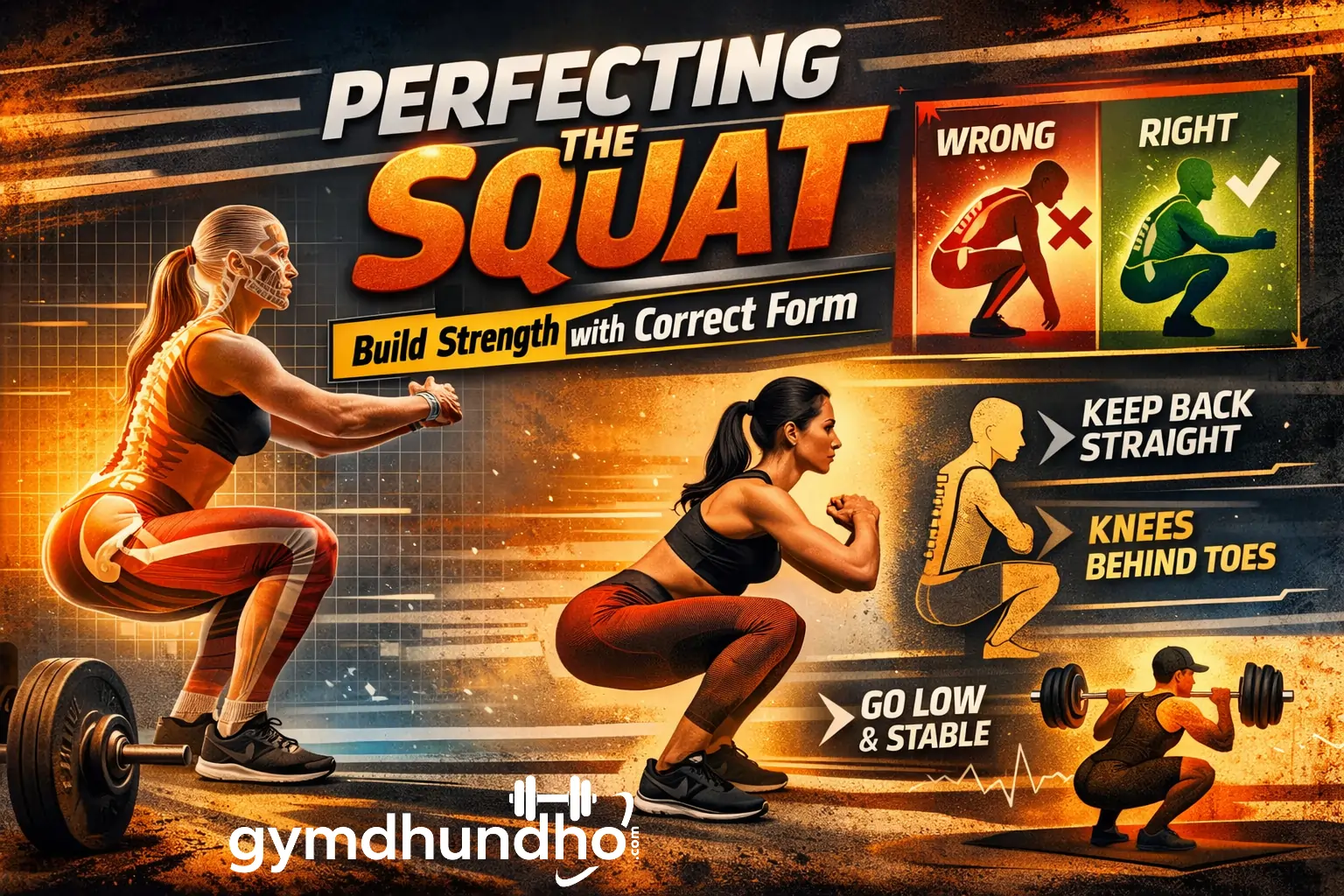
The squat is one of the most powerful exercises in strength training yet it’s also one of the most misunderstood. When performed correctly, squats build total body strength, improve mobility & reduce injury risk. When done poorly they can stall progress and strain joints. Mastering squat form is the key to long term strength and safe training.
Why Squat Form Matters More Than Heavy Weights
Many lifters focus on adding weight before perfecting technique. Proper squat form ensures the right muscles glutes, quads, hamstrings and core do the work. Good mechanics protect your knees, hips and lower back while allowing you to lift heavier over time without setbacks.
Muscles Activated During a Squat
Squats are a compound movement that engages multiple muscle groups. The quads and glutes generate most of the power while the hamstrings assist with control. Your core and lower back stabilize the spine and your calves and hips support balance and depth. This full body engagement makes squats highly effective for strength and muscle development.
Step by Step Guide to Proper Squat Form
Start with your feet shoulder width apart toes slightly turned out. Brace your core keep your chest tall and push your hips back as you begin to lower. As you descend keep your knees tracking in line with your toes and your heels firmly planted on the floor. Drive upward through your heels squeezing your glutes at the top.
Breathing and Bracing for Stability
Breathing plays a critical role in squat performance. Take a deep breath before lowering to brace your core creating stability around the spine. Exhale slowly as you push back up. This technique improves control power and safety during each repetition.
Finding the Right Squat Depth
Depth varies from person to person based on mobility and comfort. Aim for at least parallel where your hips drop to knee level. Deeper squats can increase muscle activation but only if they can be performed without pain or loss of form. Prioritize quality over depth.
Common Squat Mistakes to Avoid
Avoid letting your knees cave inward, lifting your heels or rounding your lower back. These errors often come from poor mobility or weak stabilizing muscles. Addressing flexibility and strengthening your core can quickly improve squat quality.
Progressing Safely Over Time
Once your squat form is solid begin to increase weight gradually while maintaining proper technique. Avoid rushing progress small consistent increments reduce injury risk and improve long term strength gains. Pair your training with adequate recovery, mobility work and warm ups to keep joints healthy and muscles responsive. Listening to your body and allowing rest days is just as important as training itself.
Final Thoughts
Perfecting the squat isn’t about lifting the heaviest weight in the gym it’s about moving efficiently, safely and with control. When you prioritise form, patience and consistency, strength develops naturally over time. A well executed squat builds not only muscle but also confidence, balance and lifelong movement quality.
Related posts:

Discover 10 powerful daily fitness habits that can help transform your body faster. From smarter workouts and better nutrition to recovery and consistency these simple habits can boost fat loss, build muscle and improve your overall fitness. Start applying them...
From heavy lifting to mindful movement men are embracing yoga for real strength, flexibility and mental clarity. This shift is redefining fitness beyond muscles focusing on mobility, balance and long term health. Discover why yoga is becoming the new powerhouse...
 10 Daily Fitness Habits That Can Completely Transform Your Body Faster
 From Gym to Mat: How Yoga Is Redefining Fitness for Men
 Unlock Maximum Strength: The Secret Power of Weightlifting Belts Revealed
 From Beginner to Beast: Jump Rope Cardio That Actually Works
 Beginner Fitness Made Simple: 10 Low Impact Moves That Actually Work